Why do Peruvians not know who to vote for?
The presidential election in Peru is just five days away. Six debates have come and gone, yet polling by CPI shows that 14.7% of voters would choose none of the 35 candidates, while a further 13.9% remain undecided. No candidate polls above 12%.
Even allowing for the limits of polling, this points to a striking lack of enthusiasm.
Why is the electorate unable to unite around the candidates, and what does this reveal about the state of the country’s democracy?
Corruption
Peru’s most prominent politician is also its most divisive. The current frontrunner, Keiko Fujimori, polls at just 11.8%, reflecting both her name recognition and the limits of her appeal. She is the daughter of former president Alberto Fujimori, whose authoritarian rule in the 1990s combined economic stabilisation and the defeat of the Shining Path with serious human rights abuses and systemic corruption. His legacy continues to define her political fortunes.
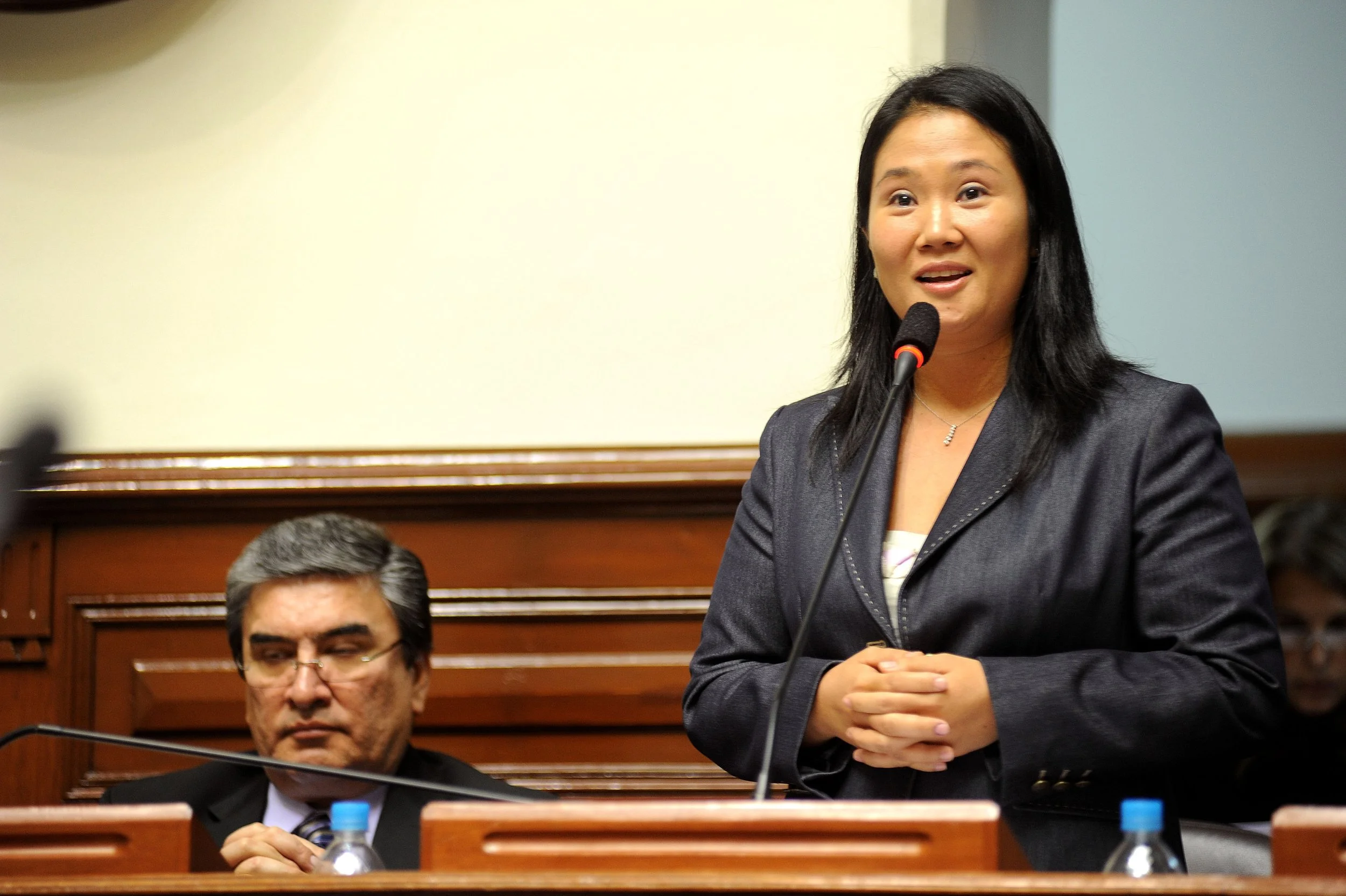
Keiko Fujimori is the country’s best-known politician and is leading in the polls.
Fujimori herself has faced multiple corruption allegations, including links to the Odebrecht scandal, though she denies wrongdoing. Her party, Fuerza Popular, remains the largest force in congress and has played a central role in shaping Peru’s recent political trajectory, including efforts widely seen as weakening judicial oversight.
For many Peruvians, Fujimori represents the persistence of a political system marked by impunity and elite self-interest. This perception fuels a powerful anti-Fujimori vote that saw her lose out in the 2011, 2016 and 2021 run-offs. That broad opposition to her candidacy may once again prove decisive.
Rising violence
The only problem Peruvians see as more pressing than corruption is the rise in violent crime.
While still safer than neighbours such as Ecuador and Colombia, Peru is facing a marked deterioration in public security driven by organised crime. Reported extortions increased sixfold between 2019 and 2024, and between January and August 2025 at least 180 taxi and bus drivers were killed for refusing to pay. Homicides have also nearly doubled over the same period.
This context has fuelled support for Rafael López Aliaga, who polls at 9.2%. A railway magnate and Opus Dei member, he is an ex-mayor of Lima, where he advocated for the deployment of armed forces reserves in high-crime areas and stricter identification requirements for motorcyclists, while expanding police resources. Although these measures did not significantly reduce crime in the capital, they reinforced his image as a candidate willing to take a “hard hand” where others have failed.
López Aliaga resigned to run for president and was initially the frontrunner, though he has since slipped behind Fujimori. His platform of economic deregulation combined with a punitive approach to crime closely mirrors that of his main rival, but with a more overtly ideological tone. He has pledged to defend Peru from the “lying, thieving and murderous” left, reflecting a campaign style that is both confrontational and deeply polarising.
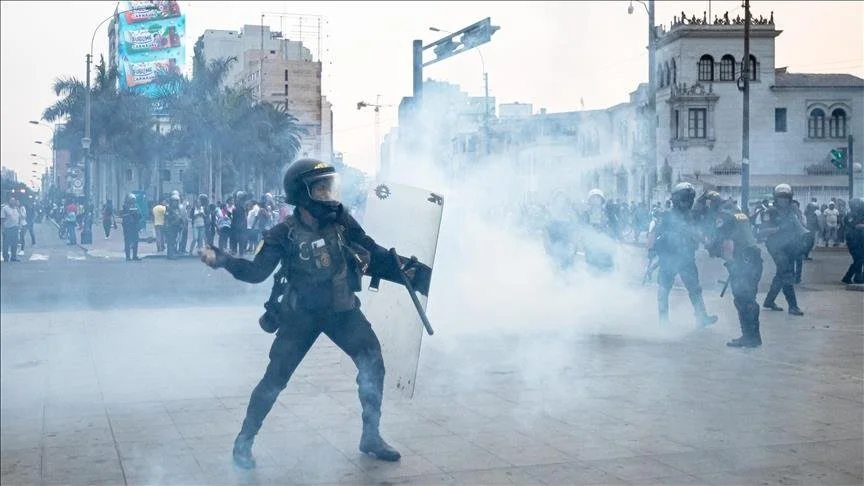
For much of 2026, Lima has been in a state of emergency owing to gang-related crime.
Trump
López Aliaga has faced criticism for his views on the freedom of the press and for suggesting that he would like to see one critical journalist “eliminated once and for all.” In his rhetoric, he is the closest thing to a Trump candidate in Peru’s election, and he has made it clear that he will seek to align Peru more closely with the US administration.
Donald Trump is not particularly popular in Peru, but there is concern about the growing power of Chinese commercial interests. Ex-president Jose Jerí was forced from power earlier this year after undisclosed meetings with Chinese businessmen came to light. Donald Trump has been vocal in his displeasure about Chinese state-owned company COSCO’s ownership of the deepwater port at Chancay 80km north of Lima. Expect López Aliaga to receive the Trump administration’s boisterous support if he makes it through to the second round.
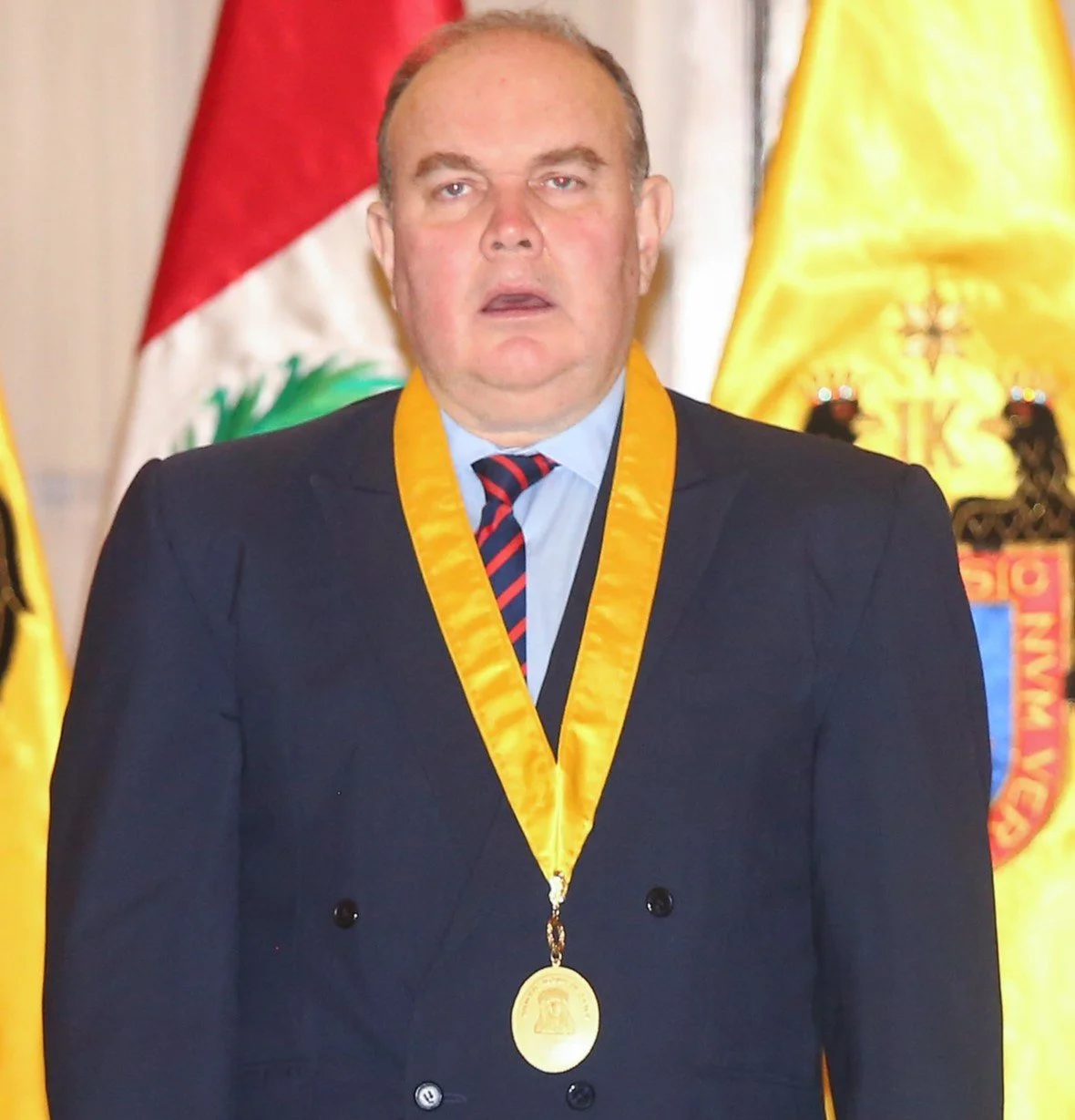
Rafael López Aliaga has embraced the epithet “Porky” after having been likened to the Disney character Porky Pig by a political opponent.
Political crisis
Since 2016, Peru has experienced a sustained period of political instability that lies at the heart of voters’ disillusionment. Congress, dominated by the parties of Keiko Fujimori and Rafael López Aliaga, has presided over the removal of seven presidents in ten years. Impeachment has been repurposed from a mechanism of accountability into a tool of political leverage, with four presidents dismissed on the ambiguous charge of “moral incapacity”. The result is a system widely perceived as dysfunctional, in which elected leaders are unable to govern effectively and institutions lack credibility.
Unsurprisingly, this crisis ranks among voters’ principal concerns. Around 65% of Peruvians say they would prefer a president from outside the political class, reflecting a widespread belief that the existing elite is both self-serving and ineffective. Yet the candidates seeking to capitalise on this sentiment often reproduce the same limitations. Carlos Álvarez, a comedian positioning himself as an outsider, avoids ideological labels, an approach that resonates with a substantial share of voters. However, his policy positions closely resemble those of establishment figures: socially conservative, economically liberal, critical of international human rights institutions, and supportive of punitive measures such as the death penalty. His appeal lies less in offering a substantive alternative than in his distance from discredited political actors. This advantage may be somewhat reduced by the revelation that he worked on propaganda campaigns for the Fujimori regime in the 1990s, but some polls have him overtaking López Aliaga in the past few days.
This pattern is not new. In 2021, Pedro Castillo rose to power on a similar wave of anti-establishment sentiment. His presidency, however, was marked by political isolation and culminated in a failed self-coup, deepening the institutional crisis. His failure damaged the reputation of progressive politics in Peru and reinforced the sense that Peru is ungovernable within the current system. In the ensuing protests, 50 people were killed and over 1,400 injured in clashes with the police.
The scale of protests against Castillo’s impeachment suggests that there is an opportunity for a left-wing candidate to make an impact at the polls. However, thus far the left have failed to unite around a single candidate in a socially conservative country that still vividly remembers the brutality of the Shining Path insurgency. The most prominent left-wing candidate, Alfonso López Chau, is polling around 4%.
Deficit of legitimacy
The extreme unpopularity of Peru’s established politicians leads to an unusually fragmented and unpredictable electoral landscape. The condition of compulsory voting makes Peruvian elections wildly unpredictable, as huge numbers of disengaged, apathetic and undecided voters will turn up to polling stations.
With such narrow differences in support between candidates there is a high chance that marginal shifts in visibility or media exposure will determine who reaches the run-off: a TikTok video or a post on Truth Social could change everything. Such vulnerability contributes to the deficit of legitimacy which already impedes the democratic system. Furthermore, the (inevitably) low approval for the incoming president increases the likelihood of further instability in the near future.