US intervention in Honduras’ Elections
The “Donroe Doctrine” in Honduras
Nasry “Tito” Asfura was sworn in last week as the 37th president of Honduras after a chaotic election marked by repeated threats from Donald Trump, a disputed vote count, and the extraordinary release of convicted former-president Juan Orlando Hernández (JOH).
More so than the strikes on Venezuela, the Honduran elections show how Trump and Secretary of State Marco Rubio will seek bend Latin American democracies to the US foreign policy agenda and excise Chinese influence in the age of the “Donroe Doctrine”.
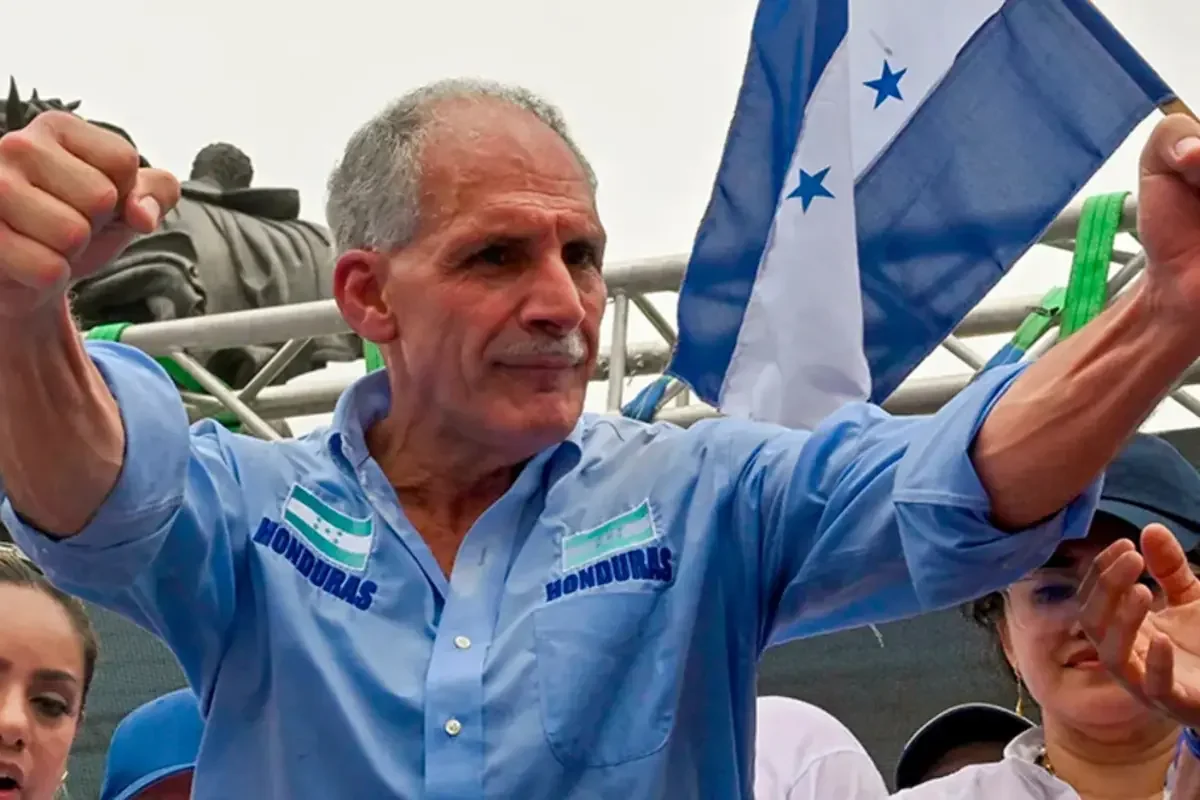
Nasy “Tito” Asfura is a real estate tycoon and former mayor of Tegucigalpa
To grasp the significance of Asfura’s ascent, it is necessary to recall the career of his predecessor as leader of the far-right. Juan Orlando Hernández (commonly known as JOH) ruled Honduras from 2014 to 2022, presiding over the steady erosion of democratic norms. In 2015 he engineered a constitutional change allowing presidential re-election, and his second victory in 2017 was widely denounced as fraudulent. Protests were met with lethal force, and Honduras became one of the most dangerous countries in the hemisphere for activists.
Behind the scenes, however, US investigators were already building a case against him. In 2018, JOH’s brother was arrested in the United States on drug trafficking charges. In 2020, under Trump’s first administration, JOH himself was indicted for drugs and weapons crimes, including accepting a 1 million dollar bribe from Joaquín “El Chapo” Guzmán. After leaving office, he was extradited, convicted, and sentenced to 45 years in prison for running what prosecutors described as a “narco-state”. The head of the Drugs Enforcement Administration (DEA), Anne Milgram, called Mr Hernández "a central figure in one of the largest and most violent cocaine trafficking conspiracies in the world".
Then, in mid-2025, the US began building up a huge naval force in the Caribbean. Opponents of President Xiomara Castro suggested that her thawing of relations with China could see Honduras become a target for US aggression. Against this backdrop, the 2025 election unfolded. Polls showed a tight three way race between Castro’s chosen successor Rixi Moncada, the centre right Salvador Nasralla, and the far right National Party candidate Nasry Asfura.
Trump intervened directly, endorsing Asfura and warning that the US would not “throw away good money” if Hondurans elected “a wrong Leader”, and branding both the left-wing Moncada and the right-wing Nasralla “communists”. Rumours spread on social media that the remittances from relatives in the US, on which 1.3 million Honduran families rely, would somehow be blocked if the electorate defied Trump.
Why back Asfura when his party remained tainted by the crimes of the JOH era, and Nasralla offered a cleaner, centre-right alternative?
In 2023, Castro had severed an 80-year relationship with Taiwan in favour of Chinese investment. Asfura promised the restoration of relations with Taiwan. He also proposed deeper ties with Israel as part of a realignment in favour US strategic goals. Nasralla argued for a reviews of the relationship with China, but stopped short of firm commitments.
Then on November 28, just two days before the election, and one day after Trump suggested the US might strike Venezuela to remove Nicolás Maduro, Trump pardoned Juan Orlando Hernández, wiping away his drug trafficking and weapons convictions.
The pardon did not trigger a left-wing backlash on polling day, with early results showing Moncada trailing badly. With Nasralla and Asfura neck and neck, electoral authorities claimed a technological failure, prompting days of confusion and a partial recount. Asfura ultimately claimed victory by 0.8 percent, or 27,000 votes. Around 130,000 ballots were never counted. Xiomara Castro denounced the process as illegitimate, but Trump accused officials of trying to change the outcome and warned of “hell to pay” if the numbers changed in Nasralla’s favour.
In a race decided by less than one percentage point, Trump’s threats alone may have been decisive. Yet, the release of JOH sent a clear message to elites across Latin America, one that rather gives the lie to the justification of strikes on Venezuela as a part of the war on drugs.
The message was clear: align yourself with US strategic priorities and even the gravest crimes may be forgiven; investment is not the only reward on offer, impunity is too.
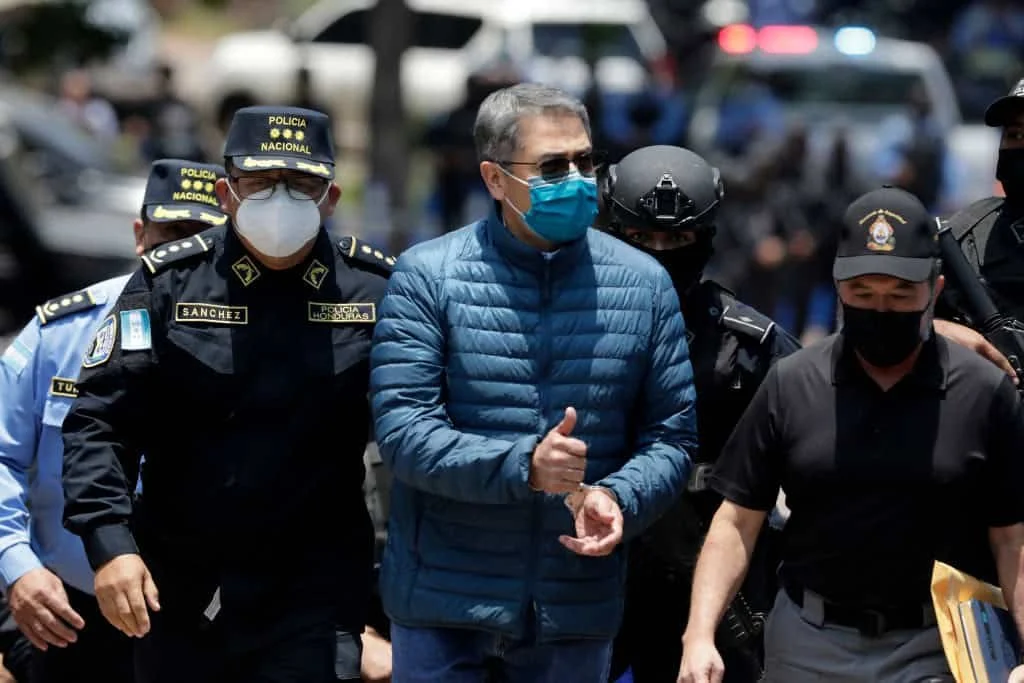
in 2024, Juan Orlando Hernandez was sentenced to 45 years in US federal prison for drugs and weapons offences.
Xiomara Castro agreed to the handover of power on Christmas Eve, and Asfura was duly sworn in, part of the growing cohort of radical right-wing leaders now sitting in Latin America, joining Argentina, Chile and El Salvador among others. Honduras’s democratic institutions look more hollowed out, its elections more fragile, and its leaders and narco-traffickers have been given a green light to flout the law. The country now sits firmly inside Trump and Rubio’s preferred regional order.
Analysts have spent much time discussing whether, after the attack on Caracas, we are likely to see US strikes in other narcotics-producing states, such as Colombia and Mexico. Looking ahead to the remainder of Trump’s second term, it seems more likely that Latin American democracies will receive the Honduras treatment.
In Venezuela, Trump and Rubio have (counter-intuitively) brought about regime change by keeping the regime. They hope to achieve compliance from the Chavistas by demonstrating what will happen to its leaders if they don’t agree to make certain concessions. This strategy carries far greater political and security risks than did the interference in Honduras’s elections. In Honduras, they have installed a new regime, one that owes its return to power to the US, without the need for any bombs or boots on the ground.
This is more likely to be the fate of other Latin American nations with elections coming up before the of Donald Trump’s second term, such as Colombia and Peru this year, and Mexico in 2028. The last thing governments in Latin America will want to do is be forced to choose between the US and China, but for democracies with elections upcoming before 2029 the pressure to show allegiance to the US is likely to be significant.